
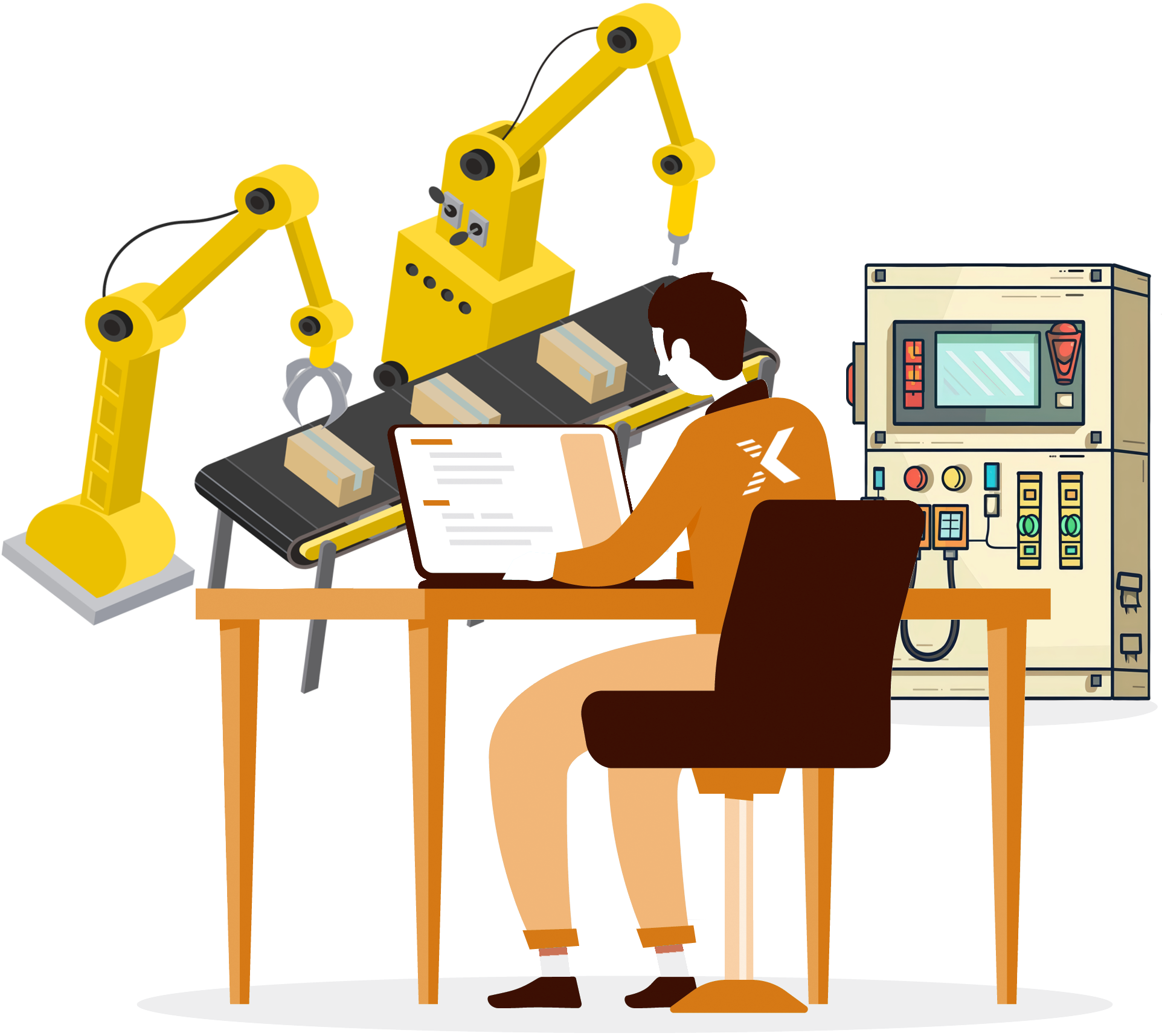
industrial automation

PLC Software development
Integration of automation systems
Visualizations

Creating solutions that power the future!

Xortech programmer

What I Offer

Your needs and expectations are most important for me - that's why every day I try to provide you with solutions that exceed your imagination, so that you can fully enjoy our cooperation. For me, every client is a partner whose success is our common mission, and your satisfaction is our greatest reward.

My Skills

I am an experienced PLC programmer specializing in the design, implementation and optimization of industrial automation systems in various industries.
My approach to work is characterized by accuracy, timeliness and care for efficiency and safety. Meeting the challenges that this job poses
gives me a lot of satisfaction.

Xortech Skills

I proficient in all major PLC programming languages, including STL, LAD, FBD, SFC, and IL. Additionally, I have the advantage of being skilled in programming languages such as C++, HTML, CSS, PHP and SQL, which allows me to integrate PLC systems with web-based applications and enhance overall functionality. I also strive to incorporate IT techniques into PLC programming to improve code readability and solve problems in innovative ways.

My extensive knowledge and experience working with various types of PLC controllers allow me to effectively design, program, and optimize industrial automation systems. I excel at tackling complex tasks related to automation and integrating PLC systems with other technologies, drives and devices.

My Certificates

I am ready for any challenge in automation

As a student,  was already thinking about my future and my profession. I was aware that the dry knowledge gained during my studies did not fully translate into current automation standards. I also knew that practice, that it was the key to achieving success. This was my motivation to complete training and courses in the field of automation, which allowed me to feel the practical side of PLC programming. So, in the last year of my engineering studies, I decided to take a step forward and complete my first practical course in programming Siemens PLC Controllers. I spent several weekends sitting until late at night at Siemens headquarters, but I was delighted. Right after that, I completed a second course, on safety controllers. This was the first stage that allowed me to get my first job - as a PLC programmer - that sounds proud.

For the projects I participated in during my professional career, I also received training in factory standards. These trainings were crucial in deepening my competences in the area of ​​automation and programming, allowing me to better understand the specific requirements and procedures in leading automotive companies.
Siemens certificate

Siemens Simatic S7-1500 Programming Advanced Course

Siemens

Issued April 2018

Siemens Safety certificate

Programming and Designing in STEP 7 Safety Advenced in Simatic Safety & Integrated S7-1500 Controllers

Siemens

Issued April 2018

Integra certificate

Daimler Integra V6 PLC Standard

Mercedes-Benz AG

Issued August 2020

VASS certificate

VASS V6 Siemens PLC standard

Volkswagen Group

Issued November 2021

Ready to start something great?

Let's drive your automation forward with expert PLC solutions. Let's work together!

Conatct Me

About Me

Discover how my personality can fit into your Team
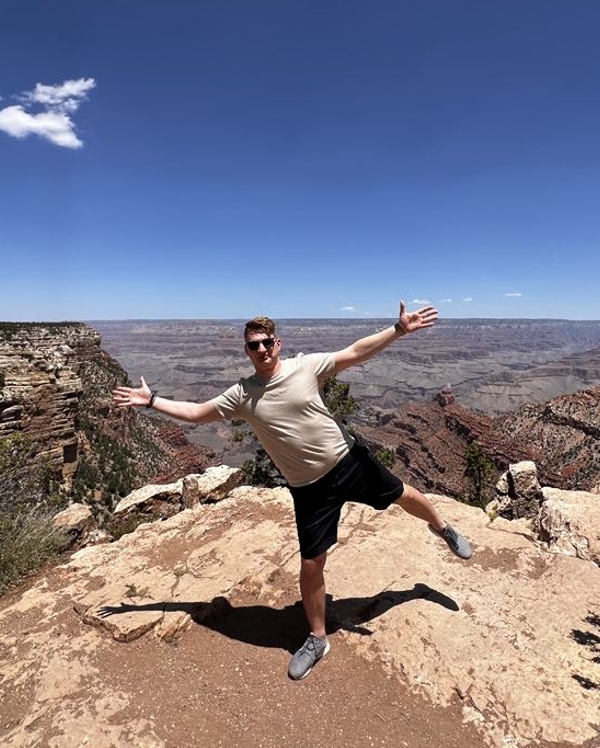
Tomasz Radomski

Tomasz Radomski

PLC Software Developer

Hello world! My name is Tomasz Radomski, though most people call me Tomek (more familiar version of my name). I’m 30 years old, and my path has been shaped by both my technical education and my passion for exploration, in the broad sense of this word. I attended a technical high school focused on IT, and later, I earned a degree from the Silesian University of Technology, specializing in Automation and Robotics. I’ve always been fascinated by how machines and devices work and over time I started channel that curiosity into creating solutions in the world of automation.

My interests extend beyond just work – I’m an avid traveler, always eager to explore new cultures. And yes, I’m the kind of person who believes that every trip is a chance to indulge in great food. I have a particular love for Italian cuisine and coffee – I think that, Italian espresso runs through my veins.

Outside of my professional and travel pursuits, I’m a hands-on kind of person. I enjoy crafting, tinkering with cars, and diving into the latest technologies. My hobbies reflect my love for building and understanding how things work.

Friends often describe me as charismatic, ambitious and determined, qualities that define me both in my personal and professional life. My personality type is architect (INTJ), meaning I take a strategic, methodical approach to solving problems and achieving goals. Whether it’s in a project or a new challenge, I’m driven by the desire to succeed and perfect my craft.

In winter, you’ll find me on the slopes, learning to master snowboarding – always up for new challenges. It's not my strongest point yet, but practice makes perfect. I hope that I will soon be able to change this point in the above text.

Frequently Asked Questions

Automation PLC expert without secrets – answers that will cheer up your questions.

As a PLC programmer, my professional experience spans a wide range of projects in automotive, intralogistics and chemical industry. I have worked with various PLC brands and models, including Siemens, Allen-Bradley and Schneider Electric. I designing and programming automation systems for manufacturing, process control, data management and transport applications. Throughout my career, I have been involved in troubleshooting complex automation systems, optimizing existing logic for better performance, and developing custom solutions to meet specific client requirements. I created PLC software that was in line with the standards of such corporations as Mercedes or Volkswagen, or in response to prototype production lines, I created my own, tailored production line control standard, which was a great challenge.

Throughout my career in industrial automation, I have encountered several challenges that required creative solutions and solid technical knowledge.

Many projects required integrating PLCs with SCADA systems, HMIs, safety systems, and other devices such as drives and sensors, which were supplied by different companies. Each system had its own specific requirements and communication protocols, which demanded a deep understanding of technologies and protocols like Modbus, Profibus, and Ethernet/IP.

In many cases, automation systems were expanded with additional functionalities, which resulted from customer demand, leading to performance issues and difficulties in maintaining the code. To solve this problem and make the software easier to read for operators, I had to adopt my own rules and standards.

Industrial automation often operates in harsh environments, such as fluctuating temperatures, humidity, or electromagnetic interference. There were instances where system failures required quick responses and precise troubleshooting to avoid production downtime, what requires from my side a lot of calmness and managing stress in difficult situations.

Ensuring the safety of machines and operators is crucial in any industrial automation setup. Implementing appropriate solutions like safety functions in PLCs required knowledge of standards and regulations, such as SIL (Safety Integrity Level). Adapting systems to safety requirements involves both technical and organizational challenges.

Automation is a complex field where many people and departments need to collaborate. I often faced challenges coordinating work with other specialists, such as electrical engineers, programmers, and project managers. Effective time management and communication within the team were key to ensuring that the project proceeded according to plan.

Industrial automation evolves rapidly, with new technologies such as the Internet of Things (IoT), cloud computing, and artificial intelligence being introduced. This requires me to constantly learn new technologies to be able to provide the highest level of service for my customers.

Each of these challenges required not only technical skills but also the ability to adapt to changing conditions, creative thinking and a willingness to be open to non-standard solutions.

I think there are a few features that are particularly important. First, precision is crucial – in automation, every detail matters, so it’s essential to ensure each stage of the work, from design to installation and testing, is carried out accurately. Another important trait is patience, especially when troubleshooting or diagnosing issues, as it often requires analyzing complex systems and identifying the source of a problem.

Creativity is also vital – many tasks in automation require thinking outside the box, especially in difficult situations where there are no straightforward solutions. Analytical skills are necessary to understand how systems work, analyze data, and optimize processes.

Another important quality is stress resistance. In this field, challenges and unexpected situations arise frequently, and the ability to stay calm under pressure is crucial. Whether it's meeting tight deadlines, solving complex problems, or dealing with system failures, being able to manage stress effectively allows for better decision-making and ensures high-quality work even in difficult circumstances.

Lastly, but equally important, is a passion for technology. The work of an automation specialist doesn’t stop at performing daily tasks – constantly seeking new solutions, checking new technologies, and focusing on professional development are key to success in this field.

I chose industrial automation as my profession for several reasons, which stem from my passions and experiences. During my time at an IT technical school, although I was interested in computer science and programming, I noticed that working at a computer didn’t provide me with the tangible results that could fully satisfy me. I felt like something was missing – something I could touch and see.

Since I was a child, I spent a lot of time with my father in the garage, where we tinkered, built simple machines, and repaired cars. Those were the moments that fascinated me the most, as I could literally "touch" technology and see how everything worked. A turning point came when I was 16 years old and I started my first inverter. I installed it in a bench drill, which allowed me to smoothly control the spindle speed. This helped solve the problem of not having access to a three-phase installation, and at the same time, I felt how amazing it was to be able to control a machine.

I decided to pursue automation because it combined my interest in programming with mechanics, which has always fascinated me. I wanted to work with machines that could be programmed and that I could make move. Industrial automation allowed me to combine these two passions, opening up many new and exciting opportunities. Every project I participated in gave me great satisfaction – the knowledge that my actions influenced the functioning of real-world machines was extremely motivating.

Contact Me

Your satisfaction is my motivation.

Xortech Tomasz Radomski

NIP (Tax-ID): 6482809742

REGON: 522054641

Adress

Opawska 77

41-800 Zabrze

Poland


Phone:

+48 663 087 521


Email:

info@xortech.pl

Scan Me
Xortech qrcode

4525850 lines of code

One Line of Code - One Small Step for a Programmer, One Giant Leap for an application.

4741 cups of coffee

Coffee is not just a drink - it's my secret weapon that makes coding smoother and solutions come faster.